


If you’re reading this article, you are probably not the average dentist or healthcare provider. You have in-depth knowledge and experience when it comes to helping people sleep better and living longer because of it. Should you document that knowledge in the form of a book? Yes, I think you should write it.
Patients struggling with sleep and other issues often turn to the internet for answers, and sometimes trusted advisors like friends and family. Those answer sources, human and AI-powered alike, will occasionally recommend a helpful book on the subject. If they don’t point to the book itself, they often point to the authors as the experts. That could be you.

Is A Book Right For You?
If the idea of penning an entire 200-to-300-page book gives you heart palpitations, breathe.
Maybe writing an entire book isn’t right for you. That’s okay, but don’t let yourself off the hook too easily. Start smaller with opportunities that exist today.
Online articles can spread your message and build your reputation as an expert. That connection is what you’re after. Even a podcast or series of videos on YouTube or Tiktok can do the trick; the content is what matters. But physical books have a few unique qualities these digital mediums don’t.
First, people are impressed when they hear you’ve written anything. Writing is difficult for most people—probably it’s difficult for you. And so, if you stick to it long enough to put together an entire book, people are wowed by this achievement. This boosts your authority and trust in the eyes of many people before they read your content. To a certain extent, this is true for the search engines as well.
Second, books have permanence. People are reluctant to throw a book away. Even if the book was given to them, a printed book feels like it’s worth something and folks just don’t like throwing away money.
When someone gets a copy of your book, whether they bought it or someone bought it for them, your name on the cover has already increased in value. Even if the book is on the shelf in their living room, when they think of sleep apnea treatment, they’re likely to think of that book…then your name…and even if they never read the book, when they decide it’s time to do something about their snoring and apnea, they’re much more likely to look you up and recognize your name in their answer engine of choice.
Internet videos don’t have that level of permanence. Nor do podcasts. They get buried in the user’s feed and unless they save it for later—even if they do bookmark it somehow—they’re less likely to retrieve the video on their own than they are a book from their shelf, even if it’s just to remember your name.
AI Makes It Easy…To Fail
In today’s post-digital, AI-enabled media landscape, your reputation and knowledge are intertwined with your visibility online more than ever before.
With large language models almost begging us to let them do our work for us, it’s not uncommon for people to look at AI as the “easy button” for finally making their book a reality. Consequently, I’ve also encountered some people who point to the existence of AI as the reason not to bother writing anything. They feel like the Internet is already drowning in so much slop that the value of content is plummeting.
This scenario of bot-generated garbage swallowing up human-generated creation has already largely played out. Every player in the game (Google, Meta, Open AI, and Amazon) has come to the same conclusion: quality is paramount and they must protect quality and transparency or risk becoming irrelevant.
Amazon requires authors to disclose AI usage when they upload their books to their platform, and quality testing has also been baked into their algorithm for a long time. They only want to rank products (including books) that sell well and lead to relatively few refund requests. This maximizes sales and profits on their platform.
Google has already said they vet content for quality before they will rank it well, and consumers have railed against AI video slop too, becoming hyper-vigilant in their search for authentically-human content versus bot-gen’d rubbish. This all sets the stage for the success of human-crafted, quality content to be prized and promoted.
Bots are trained to seek out authoritative human experts who are creating content so the AI models can learn from them and can direct their human users to them for answers. When you write a book or an article and it is published for all the world to see, you make yourself available to be identified as one of those authoritative human experts. This leads to more opportunities for new patient visibility, speaking engagements, and other professional growth and success that can snowball.
Starting The Creative Process
First, identify who you’re writing to as an audience. Doctors tend to immediately start writing for their peers. Most of the time, this makes little sense. Your doctor peers probably already know a lot of the basics you would write about, and the number of your peers willing to take time out of their busy day to read a book of any kind is small compared to the large pool of layperson readers who need you to share your unique insights and experiences—including those your doctor friends would find pedestrian.
Google, Bing, Perplexity, Claude, ChatGPT and all the human beings out there are much more interested in a fresh voice that will help the most people with the biggest problems. In your case, this may be writing a book that is not entirely unique in what you are discussing (for example: how oral appliance therapy works), but writing on that same subject from your own point of view with your own voice.
“If there's a book that you want to read, but it hasn't been written yet, then you must write it.”
― Toni Morrison
When you do this, you birth something new into the world, and this is what will generate excitement and trust. Do this with your patients in mind, and you’ll have a much larger audience.
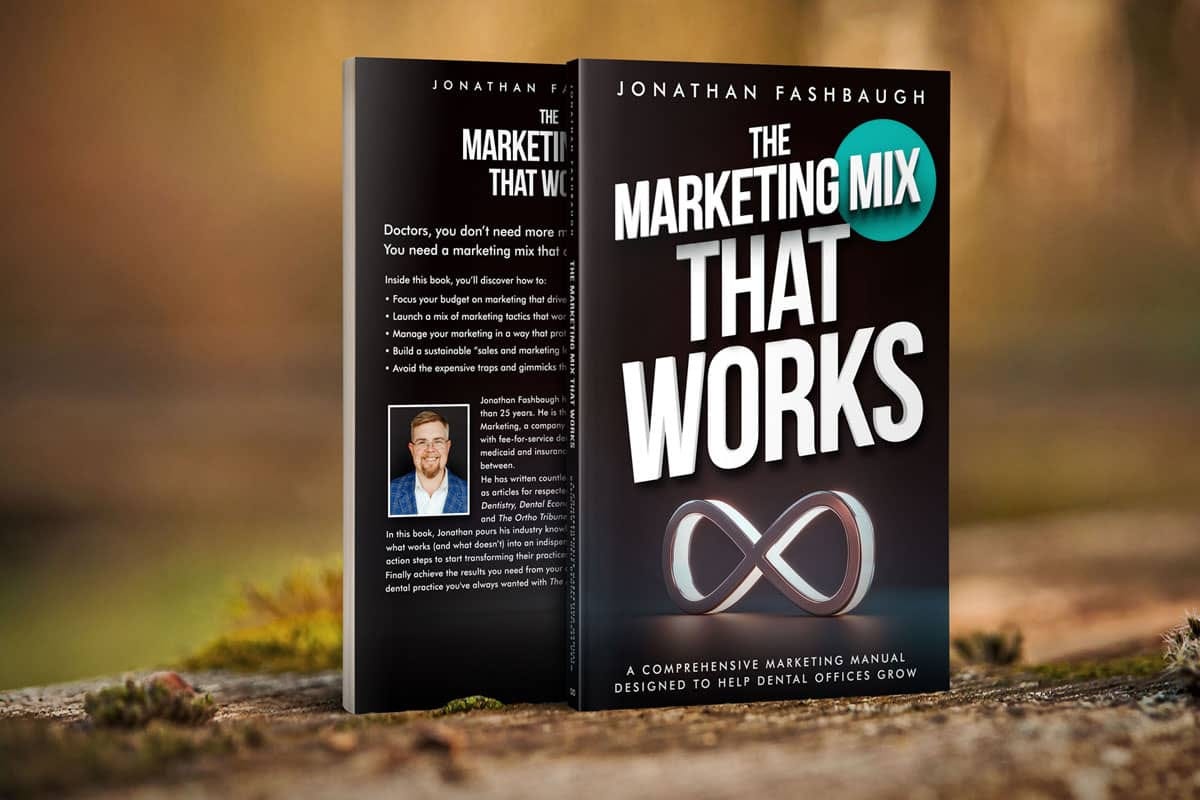
When I wrote my marketing book, The Marketing Mix That Works, I didn’t just write it with future customers in mind. I decided from the first moment to use the writing project as an opportunity to help every dentist, consultant, office manager, and even competing marketers. I wrote it with honesty and openness, leaving nothing out because I knew this was the best way I could write a book that would have the largest impact.
Do the same thing.

You owe it to the world to be generous with your knowledge. Use plain language whenever possible. You can introduce technical and clinical words when appropriate but only do so to equip your reader with the words they need to better understand their condition and the treatments available to them.
Make your reader your north star, directing your content to help them identify and solve their biggest problem that you can solve. Be sure to focus on outcomes and emotions. You don’t just help them sleep with an open airway. You help their brain and other organs get oxygen at night.
The daytime benefits are countless and life-changing. They go from cranky zombies to people who can focus and be pleasant. They have energy to go do things. It’s entirely possible, by publishing your book, you can give people the energy, excitement, and brain power they need to access their own creativity and write their books too.
Publishing Process
The harder the process is to publish, the more value you’ll tend to get from it, but that doesn’t mean you have to take the most arduous route to creating and publishing.
Start small. Aim for an article published online or in your local paper. LinkedIn is a great place where you can write and publish with no risk but with decent upside as Google, ChatGPT, and others will devour every article written. Doing these small experiments is just to find your voice and to see if you really have the stomach for creating content.
You can use AI to brainstorm ideas and proofread your content. You can even use AI to fully edit your text. But if you go the other way, having AI write the first draft, and you don’t rewrite it to make it yours, you’ll sell yourself—and the world—short, and you’ll open yourself up to regrets down the line.
Instead, roll up your sleeves. Do the hard work yourself.
Publishing a book should take you a couple of years. You’ll write the first draft over a series of months, put it away for a few weeks, then review it with fresh eyes. This stage is both thrilling and mortifying. You may find you’ve written some really exciting stuff that is blighted with a ton of typos, run-on sentences, and surrounded by large passages of incoherent drivel.
That’s okay. Your first draft is not the final draft.
You rework this draft into a coherent second draft, then ask some people you trust to review it and give you some honest feedback. Ask them to give you specific input on how you can make it better, then roll up your sleeves again (just never roll them down, okay? It’s easier that way) and get to work on a third draft.
Once you have something fleshed out, you can look for an agent or a publisher who will work with you toward traditional publication of your book.
I only recommend going down the traditional publication rabbit hole if you plan on making a go of it as an author as a second or third career. Agents and publishers are looking for someone who will commit to regularly writing and publishing great work, or who has written a perennial best seller, so they are generating a new stream of income for their business.
That’s probably not you.

Maybe I should have led with this, but you’re not going to generate a huge stream of additional income writing a book about what you do—you might see a nice uptick in production secondary to the book coming out—but book sales will not put any kids in your life through college. It’s always possible someone very influential will find your book and have their lives so changed and will make you a guest on their talk show and your book blows up…but that’s more than a long-shot.
Because you’re a long-shot, publishers aren’t likely to be interested unless you’re willing to pay them.
Hybrid Publishers
In traditional publishing, the publisher is taking on most of the risk. They are footing the bill for the editing, design, printing, and distribution of your book. You may even get a small advance on your share of the sales.
In contrast, self-publishing is where you put in all the work to get your book out the door, covering all costs.
Hybrid publishing is where you pay someone else to do all the publishing work for you. These types of publishers are also sometimes referred to as vanity presses. You still write the book in most cases, although ghost writing is almost always also available, but you don’t have to worry about editing, layout, cover design, etc because you’re paying the publisher to do all that.
People are frequently disappointed by hybrid publishers because the publisher doesn’t educate first-time authors or set proper expectations.
If you don’t work with a designer, an editor, a proof-reader, and a book layout specialist, and instead pay a hybrid publisher to be the middleman, the onus is on you to advocate for yourself in that triangular relationship. You must communicate a clear vision of what you want and don’t want.
If you don’t have a direct referral and proof of the hybrid publisher’s track record for putting out quality books, there’s a strong chance the book you get will not be much better than you would have done yourself.
You either need a hybrid publisher with a good track record (I don’t have a name to give you—sorry) or you need to work with a team of people you assemble at every step of the way. This process is like hiring people to work on your home. You get referrals, call them up, get a feel for how they do things, ask for additional references, and in the end, plan on communicating your butt off to best understand what’s happening. Ideally, you find a homerun dynamo who leads you through the process and does great work.
Do not skimp on quality just to save money along the way. A book is a forever thing. Yes, they can go out of print, but if you do your marketing job right, you’ll get 1,000+ copies out into the world in the first year. This is another aspect of publishing that new authors, whether they’re dentists or not, do not know: they are the marketing team.
Marketing Your Book
Shawn Coyne, veteran editor of 30 years once said, “Exposing 10,000 people who care about the arena of your book gives you a chance that enough of them will actually read it and then recommend it to someone else. That word of mouth will keep the book alive from one year to the next.”1
Book marketing expert, author and editor, Tim Grahl, shrinks the goal to selling 1,000 copies of the book in its first year of publication. He wrote Your First 1000 Copies as a step-by-step guide on how to do that, and you could do worse than picking up a copy as a first step in book marketing.
When you write your book, you’ll build a fantastic marketing asset for yourself, but this marketing asset, like a website, needs promotion if it’s going to be successful.
The terrific part of this is, while marketing your book, you’re marketing yourself. You’re establishing yourself as an expert in your field as I mentioned earlier. You start cranking an engine that, as you continue to turn it over, gains momentum.
The moment you identify your title and get your first images of the final cover design, you need to shout from the hills that you’ve achieved this monumental thing! “I’ve written a book!” But even before then, announce to the world that you are writing a book and tell them how they can follow you on this journey. Then keep sharing. Talk about your progress. Generously share tidbits of information. People who like the taste you give them will be more likely to follow you on social media or subscribe to your email list.
When publication day approaches, encourage people who want your book to pre-order a copy. Pre-orders promise Amazon that, when instant gratification is possible and the book is live on Kindle and Audible, and available for next day shipping, even more people will buy it. The Amazon algorithm responds to a bunch of pre-orders by ranking your book more highly in its results, so you need to encourage people to take that step if they’re willing.
Leveraging Your Book For Referrals and New Patients
Sending sleep providers a copy of your book with your card in it is a fantastic way of generating referrals. Remember how books have permanence? Your book will sit around in their office and they will be unlikely to forget you. You’ll be their new expert to try out and if you knock it out of the park on their first referral to you, you can bet they’ll mention your book as the reason they trusted you to send you the first patient of many.
Add your book to the home page of your website, your About page, your LinkedIn profile and everywhere else. You have accomplished something many others will have on their bucket list until the day they die. You have written a book that will last. Wear this like the badge of honor it is.
If you still need amping up and want to be better-equipped to write your first book, check out these books for great writing advice:
The War of Art by Steven Pressfield
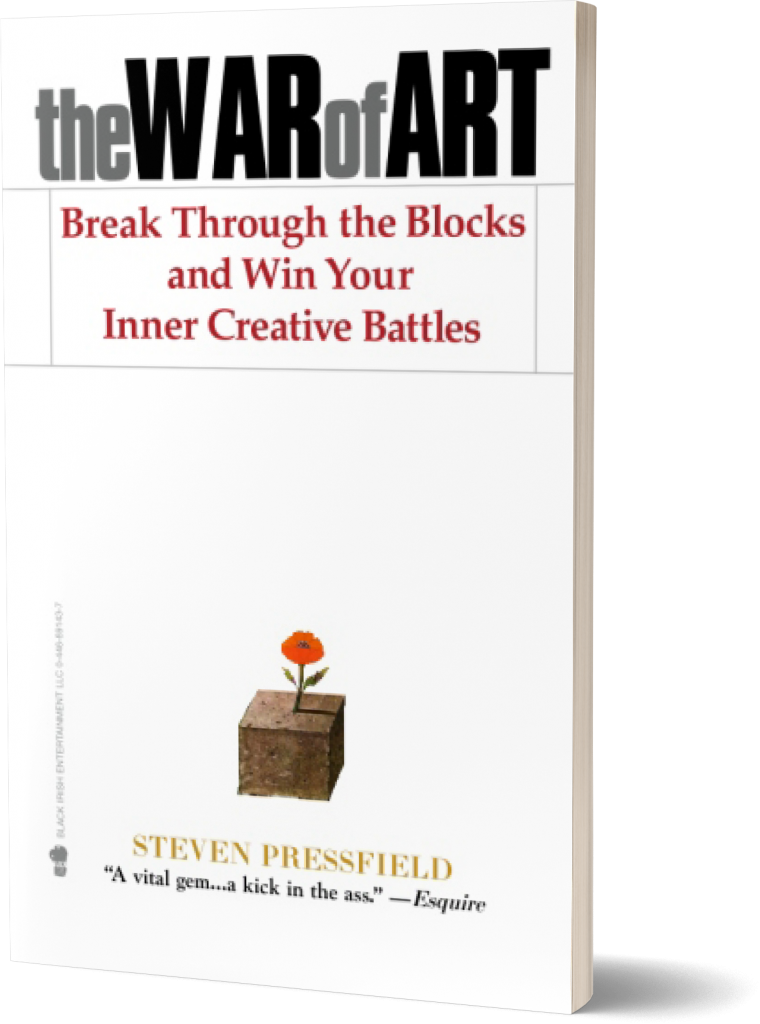
This is a must-read for every human being but especially aspiring authors.
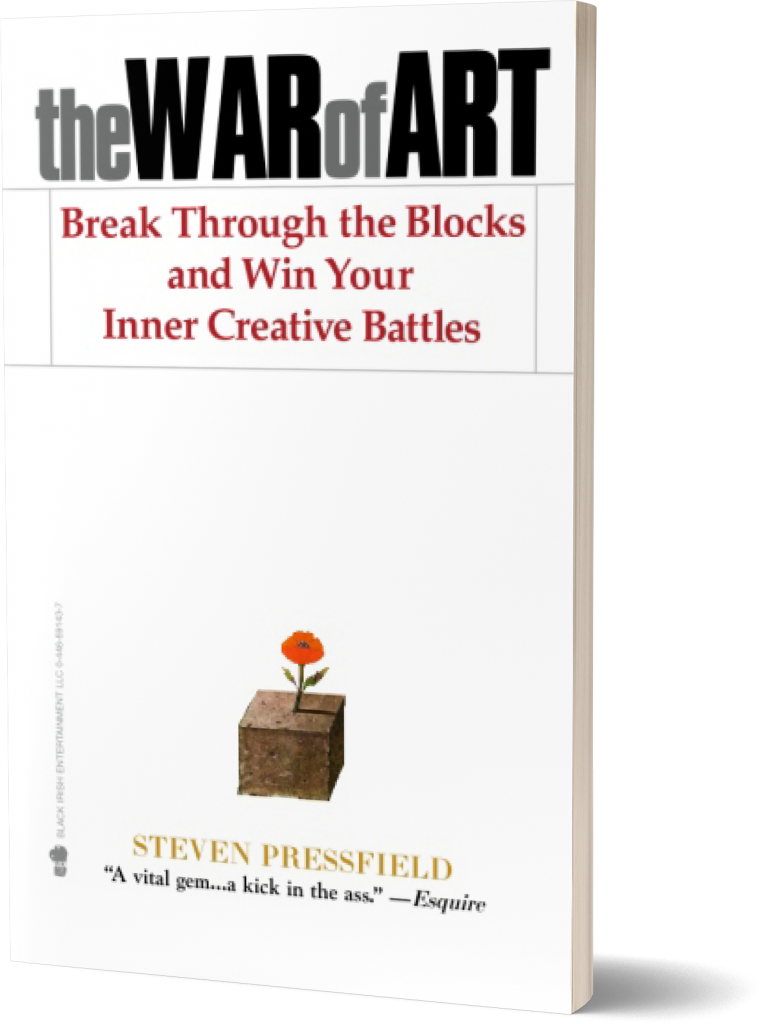
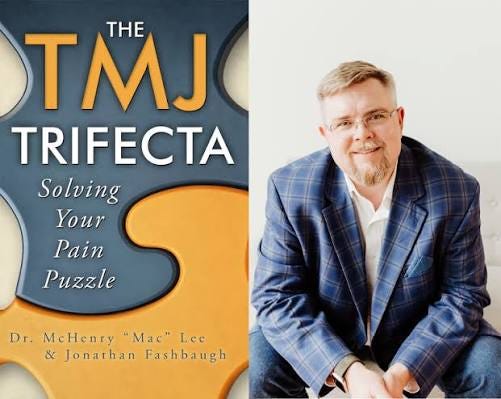
Jonathan Fashbaugh is the founder of Pro Impressions Marketing. He is the author of The Marketing Mix That Works: A Comprehensive Marketing Manual Designed to Help Dental Offices Grow, and the co-author of The TMJ Trifecta: Solving Your Pain Puzzle. His work has been published in Dentaltown, Dental Economics, Dental Sleep Practice, the Ortho Tribune and other industry publications.

Great post! I needed to hear this message today. Fan of Jonathan! 🙌 Inspired by you both over the years, thank you for always encouraging others. Jason, if you keep pulling that hair out, you will look the way I met you a couple of decades ago. 🧑🏻🦲
You inspired me to write mine! Very happy you write sequel!