

The Sleep Test Bottleneck: Patients Don’t Complete Testing Due to Communication Misalignment
If you're presenting the need for sleep testing to your patients but they don't move forward, you don't have a technology issue, you have a communication issue By Ryan Javanbakht

For years, I’ve watched dental sleep practices do almost everything right. They screen their patients, educate their teams, and refer patients for testing. And despite the best of intentions, the patient disappears like a poof of smoke.
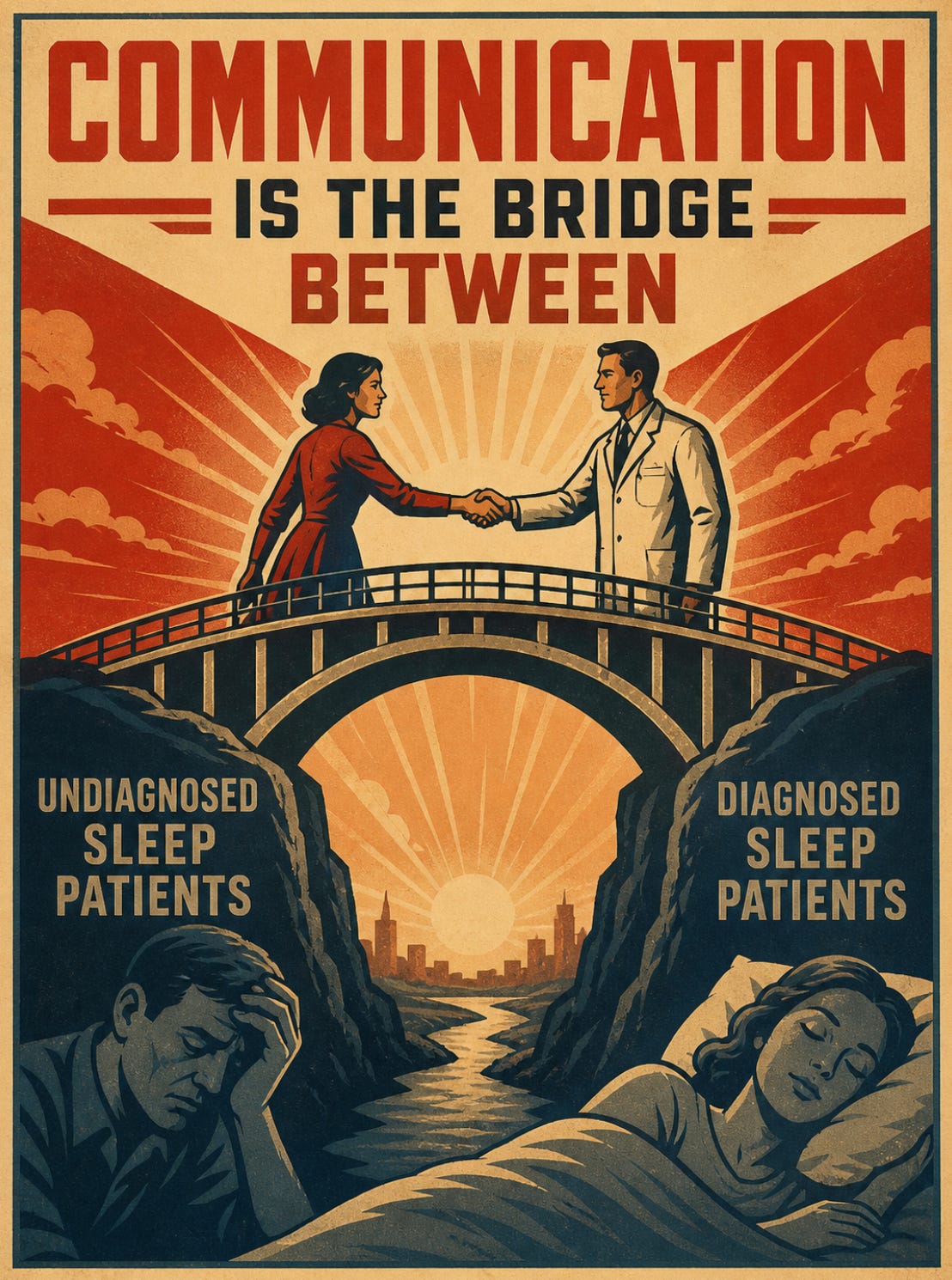
It wasn’t an issue of the patient not needing help or being offered the wrong test—the breakdown occurs in the handoff. In dental sleep medicine, testing is supposed to be the bridge between screening and treatment. Too often, it becomes the place where good intentions fall apart and patients fall into the pit of doom.
What The Data Says Helps Test More Patients
My wake-up call came from the data. At SleepTest.com, we work with practices across all 50 states. Different markets. Different teams, varied patient populations, and varying levels of experience. But the same pattern keeps showing up.
The practices with strong testing conversion rates show these patterns in their patient communication. They:
Build urgency.
Set expectations.
Connect the dots for the patient.
They make the next step feel simple, important, and doable. The sleep test is not just a clinical step. It is a communication test. And a lot of practices are failing it.
The Testing Gap
In dental sleep medicine, we usually talk about the workflow like this:
Screening
Testing and diagnosis
Treatment Planning
Treatment and Follow-up
The diagnosis step is vital. Without testing and a diagnosis, a patient will never connect their symptoms to actual data. You cannot explain a sleep study a patient never completes.
How do we get a patient to complete the test? It usually starts with your hygienist.
Stop Trying to Close the Whole Case in Hygiene
The hygienist’s role in the sleep sequence of operations is to screen the patient and get them to the next step. If the patient is comfortable moving to a test, that’s the next step. If they aren’t, then it should be to have a deeper consultation with someone on your team, an initial sleep consult.

That consult is where the team can sit down, slow down, ask better questions, and help the patient understand why this matters.
In hygiene, the patient might think, “I came here for a cleaning. What are they trying to sell me now?” You have to respect that mindset. Plant the seed. Make the connection. Then create space for a focused conversation, where once the patient is ready, you can help them get a test.
The Two-Option Script
When it is time to recommend sleep testing, give the patient a clear path.
Here is the basic framework:
“You need a sleep test, and you basically have two options.
Option one is we refer you back to your primary care physician. They may refer you to a sleep physician, who may send you for an in-lab test or a home test. Then you’ll need to get those results back to us so we can determine the next step. This process will almost certainly end in a CPAP.
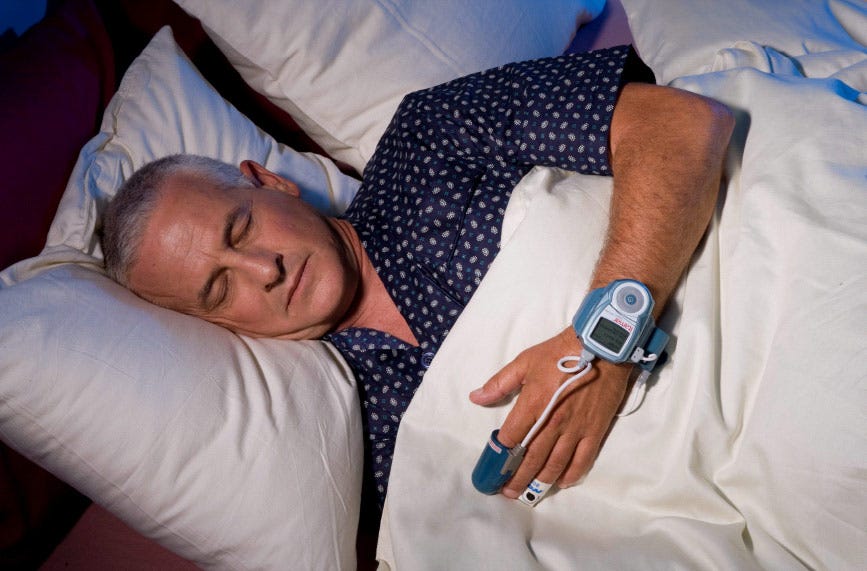
Option two is we submit your information to our testing partner. You’ll receive a text message quickly. They’ll verify your benefits, tell you your out-of-pocket cost before anything moves forward, and you can complete the test at home in your own bed. Once the results are ready, we’ll be able to review them and move forward, and talk about options like a sleep device we can make for you.
Which option do you think you’re more likely to complete this week?”
Then stop talking. Don’t fill in the blank space.
Let the patient answer.
Don’t Say “Insurance Covers It”
This is where teams accidentally create friction.
A patient hears, “insurance covers it,” and their brain translates that into “free.”
Then the testing company calls. There’s an out-of-pocket cost. The patient feels blindsided. Now everyone looks bad. That damn dentist lied to me, they’re thinking.
Set the expectation correctly from the beginning.
Say this instead: “They’ll check your benefits and let you know the exact out-of-pocket cost before you move forward.”
One sentence that builds trust, reduces confusion, and helps the patient feel the process didn’t change after they left your office.
Master the “Soft Close”: Better Questions, Fewer Objections
Have you ever heard, “Maybe” or “I’ll think about it, lemme talk to my wife first” and then they disappear? Most people are conflict averse and won’t just say no. They’ll give you one of those non-committals instead. You need to lower the barrier to entry by changing how you ask and how you listen.
The Power of “Occasionally”: Don’t ask, “Do you snore?” Patients will say no because they don’t do it every night. Ask, “Do you occasionally snore?” or “Do you sometimes feel tired?” This “gray area” questioning invites honesty instead of defensiveness.
Connect the Clinical Dots: Once they admit to that “occasional” fatigue, connect it to what you see in their mouth. “I see some scalloping on your tongue and specific wear patterns on your teeth; often, we see this in people who struggle to breathe well at night. Does that resonate with you?”
Flush Out the “Big Three” Fears: If they hesitate, don’t push—pivot. Ask: “What concerns you most about getting tested?” Usually, it’s one of three things:
The Lab: Clarify they can test in their own bed.
The CPAP: Remind them a test is just data, not a lifetime sentence to a mask.
The Cash: Reiterate that they’ll see the exact out-of-pocket cost before they commit.
Empathize, clarify the concern, and isolate the problem. When you stop “selling” and start solving their specific anxiety, the patient sells themselves on the next step.
Don’t Drop the Baton on the Handoff
A patient receives a phone call that says, “You have sleep apnea,” with no real explanation of the data, the symptoms, or what to do next.
A bunch of dots are just thrown out there like a game of 52 Pickup. No one is connecting the dots.
A patient can be symptomatic and still be dismissed because no one looked beyond the numbers. Or they get diagnosed and decide they proceed with treatment because no one told them there was another option beyond PAP.
If you are going to screen patients, you need a testing process that keeps the patient connected, returns results, includes the right documentation, and allows the patient to understand what comes next. Otherwise, you identified the problem but lost the person.
The Advanced Practice Problem
For practices already treating sleep patients, the advice is still the same.
Build urgency.
Set expectations.
Make time to connect.
It sounds basic because it is basic.
If a patient declines testing right after receiving the first text message, ask why.
Did they understand what was coming?
Did you confirm their contact information?
Did you tell them they would receive a message?
Did you explain that they would see the cost before moving forward?
Figure out what it was, pivot, and try again.
What Now?
Stop stalling and start starting.
Add two sleep questions to your new patient exam.
Train your hygienists to close only for the next step, not the whole treatment plan.
Create a clean testing handoff script.
Stop saying “covered by insurance” when you mean “we will check your benefits.”
Teach your team to ask, “What concerns you about getting tested?”
Track where patients fall out: no contact, declined testing, benefit concern, never completed the study, never scheduled the follow-up.
The data will tell you where the process is breaking.
But Does It Make Money?
Simple answer…YES.
When more patients complete testing, more patients get diagnosed. When more patients understand their diagnosis, more patients move forward with treatment. That helps the practice.
But that is not the real reason to fix this. You fix it because patients walk into dental practices every day with signs of sleep-disordered breathing, and too many of them are missed, delayed, or lost.
You fix it because communication is clinical care. You fix it because you care; because it’s who you are.
The sleep test is not paperwork. It’s not a box to check off.
If your patients are falling through the cracks, build a bridge.
It is the bridge to healthier patients and a healthier practice.
Ryan C. Javanbakht is the President and CEO of SleepTest.com. He co-founded the national home sleep testing service in 2016 after discovering his father’s life-threatening, cardiovascular condition was an avoidable one, had he only been given better access to and knowledge of sleep testing. He has since built a powerful team of motivated people whose desire it is to create a faster, more effective way of testing. He and his team wake up every morning with a purpose to provide care to the over thirty million American patients suffering with undiagnosed obstructive sleep apnea.

 | A guest post by
|
Thank you again, Jason. I really appreciate you and the Sleep Intel team taking the time to pull this together and turn it into something practical and actionable for the industry.
It was great collaborating with you and our mutual dear friend, Dr. Erin Elliott, on this discussion. These workflow, communication, and patient handoff challenges are very real across sleep medicine and dental sleep medicine, and I’m glad Sleep Intel is helping bring more awareness to them.
At the end of the day, most practices genuinely want to help patients — but if the communication process breaks down, patients can easily get lost between screening, testing, diagnosis, and treatment. That gap matters.
I appreciate Sleep Intel creating a platform where providers, dentists, physicians, technologists, billers, and operational teams can have honest conversations about what’s actually happening in the real world. That type of collaboration is how we improve patient access, education, workflow efficiency, and outcomes together.
Excited to continue contributing to the conversation and helping move this space forward!
Great information! LOVE working with SleepTest.com!